

Planning a home renovation budget in Singapore is not just about choosing a number you are comfortable spending. The real budget depends on your property type, existing condition, room count, scope of works, material choices, approvals, and how much buffer you keep for changes.
As a practical rule, start with a realistic base cost, add the must-have works, separate furniture and appliances, then set aside about 20 percent as a contingency buffer. This helps you avoid stopping halfway through the project when hacking, plumbing, electrical works, carpentry, or material changes cost more than expected.
Home Reno Pte Ltd handles HDB, BTO, condo, and landed renovation works in Singapore with transparent pricing, no GST, and no hidden costs. This guide explains how to plan your budget before you ask for an itemised quote.
Quick Answer: How Much Should You Budget For Renovation In Singapore?
For 2026 planning, many Singapore homeowners should treat $30,000 to $100,000 as the broad planning zone for HDB and condo renovations, with smaller BTO scopes at the lower end and resale or highly customised homes at the higher end. Landed homes need a separate budget conversation because full-house and structural scopes can move into six figures quickly.
Use the table below as a planning guide, not a final quote.
| Property type | Practical planning range | Why the range changes |
|---|---|---|
| BTO or new HDB flat | About $30,000 to $82,000 | Room count, carpentry, flooring, lighting, kitchen works, and whether the scope is light or full-home |
| Resale HDB flat | About $51,000 to $97,000 or more | Hacking, removal, rewiring, plumbing, repair work, old floor or wall condition, and more customised carpentry |
| New condo | About $40,000 to $52,000 for many full-home scopes | Condos may already include some finishes, but MCST rules, materials, and carpentry still affect cost |
| Resale condo | About $80,000 to $105,000 for larger or fuller scopes | Removal, repair, layout changes, higher-end finishes, and management approval requirements |
| Landed home | From room-specific package work to six-figure full-house budgets | Size, number of floors, wet works, structural changes, electrical load, plumbing, roof, facade, and external works |
The most important point is this: do not compare only the headline price. Compare what is included, what is excluded, whether GST applies, how variations are handled, and when each payment is due.
The Simple Renovation Budget Formula
Use this formula before speaking to any contractor:
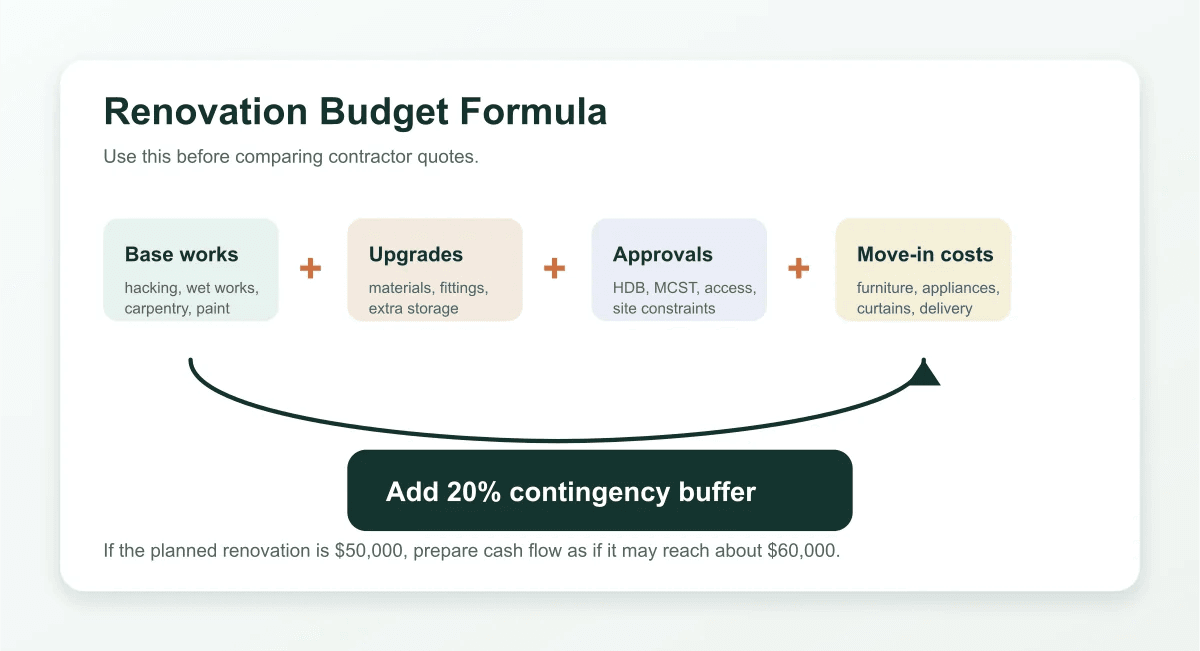
Realistic renovation budget =
base renovation works
+ optional upgrades
+ approvals and site constraints
+ furniture and appliances
+ moving or temporary living costs
+ 20 percent contingency
If you think your renovation will cost $50,000, plan your cash flow as if it may reach $60,000. You may not use the full buffer, but having it prevents a stressful decision later.
What Should Be Included In A Renovation Budget?
A complete renovation budget should usually account for:
- Space planning or design consultation
- Hacking, dismantling, and disposal
- Masonry, wall, floor, and wet works
- Waterproofing for bathrooms and other wet areas
- Plumbing and sanitary works
- Electrical works, lighting points, and switches
- Carpentry, wardrobes, kitchen cabinets, and storage
- Countertops, sinks, taps, and fixtures
- Painting and touch-up works
- Flooring and skirting
- Cleaning, protection, and handover
- HDB, condo, MCST, or building approval requirements where applicable
- Furniture, appliances, curtains, loose fittings, and decor if you want a true move-in budget
Many homeowners only budget for the renovation contract and forget the move-in costs. Appliances, furniture, curtains, aircon, smart home devices, and small fittings can add thousands of dollars after the renovation quote is already signed.
Start With Must-Haves, Then Add Nice-To-Haves
Before asking for quotes, separate your wishlist into three groups.
| Priority | What belongs here | Budget decision |
|---|---|---|
| Must-have | Safety, leaks, waterproofing, electrical issues, plumbing issues, flooring that must be replaced, essential kitchen or bathroom work | Fund these first |
| Nice-to-have | Better storage, upgraded worktops, more lighting points, feature walls, better fittings | Add only after must-haves fit the budget |
| Later upgrade | Loose furniture, decor, curtains, smart home extras, premium appliances, non-urgent built-ins | Delay if the budget is tight |
This keeps the renovation practical. A good-looking home still needs to work safely and reliably every day.
Budget By Room, Not Just By Total Price
Different rooms affect the final budget in different ways.
Kitchen
The kitchen is usually one of the largest cost drivers because it combines carpentry, countertop, plumbing, electrical points, appliances, lighting, and sometimes wall or floor works.
Home Reno’s kitchen renovation package starts from $7,988 nett for a focused kitchen scope with 10 ft bottom cabinet, selected quartz worktop, stainless steel sink, selected wiring works, and a cooker hood and hob bundle. The final kitchen quote still depends on site measurement, cabinet length, worktop length, electrical points, plumbing, and material choices.
Bathrooms
Bathrooms need careful budgeting because waterproofing and plumbing are not optional. A cheaper bathroom quote can become expensive if it misses proper waterproofing, floor trap work, wall and floor tile scope, sanitary fittings, or disposal.
If your budget is tight, spend first on waterproofing, plumbing, safe electrical works, ventilation, and durable fittings. Save on decorative upgrades that can be changed later.
Living And Dining Areas
Living and dining areas can often be controlled through flooring, lighting, painting, feature walls, and loose furniture. Built-in TV consoles and feature walls add polish, but they should not take budget away from essential wet works or kitchen function.
Home Reno’s living-room package starts from $6,588 nett for a focused refresh.
Bedrooms
Bedroom costs are usually driven by flooring, paint, wardrobes, lighting, and any study or storage carpentry. If you are renovating in phases, bedrooms can sometimes be upgraded later unless the flooring or wardrobe needs to be completed before move-in.
Home Reno’s bedroom package starts from $4,780 nett for one bedroom, with higher tiers for more rooms.
BTO, Resale HDB, Condo, And Landed: Budget Differently
The same $50,000 budget can mean very different things depending on the property.
BTO Or New HDB Flat
A BTO renovation usually starts from a cleaner handover condition. You may still need flooring, kitchen work, wardrobes, lighting, painting, fixtures, and optional built-ins, but there is usually less hacking and repair work than a resale unit.
Home Reno’s BTO renovation packages start from $8,080 nett, with separate package paths for 2-room, 3-room, 4-room, and 5-room flats. Use those pages as a starting scope, then confirm the final quote after key collection and site measurement.
Resale HDB Flat
Resale flats need more caution. Existing cabinets, floor finishes, plumbing, wiring, windows, ceiling, and previous renovation work can affect the final cost. A resale unit that looks acceptable during viewing may still need removal, repair, waterproofing, or rewiring once the work starts.
Home Reno’s HDB and condo packages include paths for new and resale HDB flats, resale promotion work, executive apartments, maisonettes, condos, and selected kitchen or bathroom scopes.
Condo
Condo renovation costs depend on whether the unit is new or resale, whether existing developer finishes can be retained, and what the MCST allows. Lift booking, access rules, working hours, protection requirements, and management approvals can affect scheduling and cost.
Before signing, ask your contractor how they handle condo rules, permits, site protection, and delivery timing.
Landed Home
Landed renovation should be split into room-specific works, full interior works, and structural or external works. A bedroom, kitchen, bathroom, or living hall package is not the same as a full landed rebuild or structural alteration.
Home Reno’s landed house renovation packages include room-specific paths and a full-house package path. Use those as starting points, then confirm whether the home needs structural assessment, waterproofing, roof, facade, plumbing, electrical load, or authority-related checks.
Do You Renovate Everything At Once Or In Phases?
Renovating everything at once can be more efficient because there is one main work period, one coordinated schedule, and less repeated mobilisation. It is often better if you have not moved in yet.
Phased renovation can help if your budget is tight. Start with safety, bathrooms, kitchen, flooring, and essential electrical or plumbing work. Leave decorative carpentry, feature walls, loose furniture, and smart home upgrades for later.
The trade-off is that phased renovation can cost more overall because contractors need to return, protect completed areas, and coordinate around an occupied home.
How To Compare Renovation Quotes
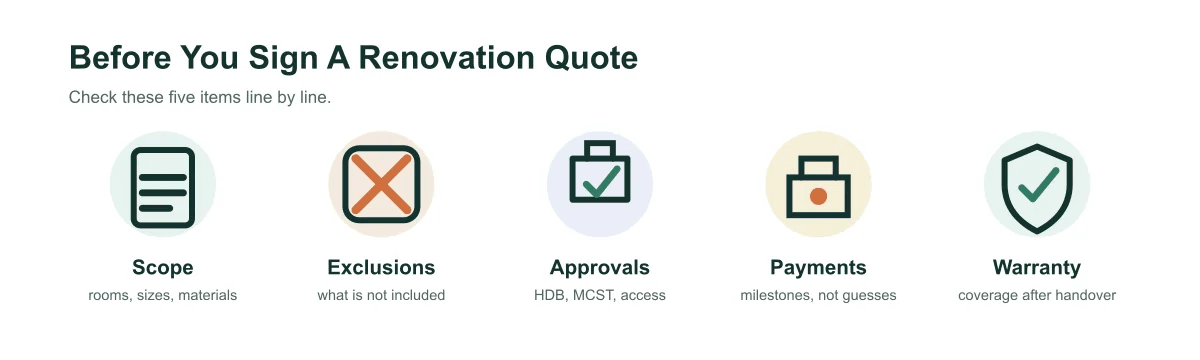
Do not choose a contractor from the total price alone. Compare line by line.
Use this quote-check list:
| Check | What to look for |
|---|---|
| Scope | Does the quote state exact rooms, works, dimensions, quantities, and materials? |
| Exclusions | Does it clearly say what is not included, such as appliances, curtains, aircon, furniture, permits, disposal, or MCST fees? |
| GST | Is GST included, excluded, or not chargeable? Home Reno is not GST-registered and does not charge GST. |
| Variations | How are changes priced after work starts? |
| Payment schedule | Are payments tied to clear milestones instead of a large upfront amount? |
| Warranty | What is covered after handover, and for how long? |
| Timeline | What depends on approvals, material lead time, site access, and homeowner decisions? |
A vague quote is not a cheap quote. It is an unfinished conversation.
Hidden Costs To Ask About Before Signing
Hidden costs usually come from unclear assumptions. Ask about these before you commit:
- Hacking and disposal beyond the listed scope
- Electrical rewiring, new points, switch relocation, and DB box issues
- Plumbing changes, water heater points, and sanitary pipe condition
- Bathroom waterproofing and tile replacement
- Kitchen cabinet length beyond the base package
- Countertop length, cut-outs, sink, hob, and appliance fit
- Wall or floor levelling
- Condo or building management fees
- HDB permit or approval-related constraints
- Weekend, urgent, or after-hours work
- Delivery, storage, and protection charges
- Material upgrades after showroom selection
- Change orders after work begins
The best time to discuss these costs is before the contract is signed, not after the hacking starts.
How To Track Your Renovation Spending
Use a simple spreadsheet with these columns:
| Column | Why it matters |
|---|---|
| Date | Shows when the cost was committed |
| Vendor | Tracks contractor, supplier, or retailer |
| Category | Lets you group costs by kitchen, bathroom, electrical, furniture, and so on |
| Estimated cost | Your planned number |
| Actual cost | What you really paid |
| Difference | Shows budget creep early |
| Paid or unpaid | Helps manage cash flow |
| Receipt or invoice link | Keeps records easy to find |
Review the tracker once a week during the renovation. Small changes are easier to manage when you catch them early.
What To Do If Your Renovation Goes Over Budget
First, separate essential overruns from optional overruns.
Essential overruns include safety problems, water leaks, failed waterproofing, wiring issues, or hidden site conditions that must be fixed properly. Optional overruns include upgraded finishes, extra carpentry, premium appliances, and design changes.
If the budget is moving too fast, pause new upgrades and ask for a revised cost summary. Keep the must-haves, simplify the nice-to-haves, and move later upgrades to a future phase.
You can often reduce cost by:
- Reducing custom carpentry
- Keeping the existing layout where possible
- Choosing durable mid-range finishes
- Using loose furniture instead of built-ins
- Limiting feature walls and decorative details
- Keeping premium appliances outside the renovation contract
- Confirming all changes in writing before work continues
When To Ask Home Reno For A Quote
Ask for a quote when you can describe your property type, room count, timeline, and must-have scope. Photos, floor plans, key collection timing, and reference images will make the first conversation more useful.
You do not need to know every material choice before speaking to us. But you should know your budget ceiling, what cannot be compromised, and whether you are planning a full renovation or a focused room package.
Start from our renovation packages or request an itemised quote when you are ready to compare your real scope against the right package path.
Frequently Asked Questions
How much should I budget for a 4-room HDB renovation in Singapore?
For a 4-room HDB renovation in 2026, a practical planning range is often about $40,000 to $80,000 depending on whether it is a BTO or resale flat, how much carpentry is needed, and whether you are doing a light refresh or full renovation. Add a 20 percent buffer before deciding your final cash flow.
Is $30,000 enough for a renovation?
$30,000 can work for a focused or basic scope, especially if the home is new, the layout stays the same, and you avoid heavy carpentry. It is usually tight for a full resale HDB or condo renovation once hacking, wet works, electrical, plumbing, carpentry, furniture, and appliances are included.
What is the biggest cost driver in a renovation?
Carpentry, masonry, wet works, electrical works, plumbing changes, and layout changes are common cost drivers. The more you customise fixed items such as cabinets, wardrobes, countertops, walls, and floors, the faster the budget rises.
How much contingency should I set aside?
Set aside about 20 percent of your expected renovation cost. If your planned renovation is $50,000, prepare for a $60,000 cash-flow ceiling. This protects you from hidden site issues, material changes, approval delays, and small upgrades that add up.
Is it cheaper to renovate before moving in?
It is usually easier and often more efficient to renovate before moving in. Contractors can work faster without protecting furniture or coordinating around daily living. If you renovate after moving in, phased works may help cash flow but can increase disruption and repeated mobilisation costs.
Should I use a renovation loan?
A renovation loan can help if the home needs work before you can move in and the monthly repayment fits your finances. If the renovation is not urgent, saving first may reduce interest costs. Always compare loan terms, fees, and repayment comfort before committing.